Friday, September 20, 2013
"Lineage" A solo exhibition of new paintings by Chris Trueman
For his third solo exhibition with White Box Contemporary Trueman expands on a developing body of work that revolves around the construction of paintings that inhabit precarious and unstable territory. Trueman creates visual tension by combining seemingly irreconcilable strategies of painting and various historically informed motifs and styles. The paintings for this new exhibition push the boundaries of how we see and experience paintings by employing a mixture of high-contrasted stripes, moirés and complex layering. These truly dynamic paintings toy with the typical power structure of viewer/object through a strategy of partial disclosure and quite simply refuse to sit still. The work is diverse, playful and underscore a deep exploration of the painting medium that Trueman has undertaken.
2013 has seen a burst of activity for Trueman. The young artist began the year with his first solo museum exhibition at the new Museum of art and History in Lancaster, which received a Huffington post review. His work was included in the New American Paintings publication edition 103, featured in Fabrik Online magazine and on the Huffington Post Imageblog. He received a glowing review for his two person show in Washington DC in the Washington Post. His work has been exhibited at the Dallas Art Fair, Pulse New York and will be featured later this year at Art Aspen, Houston Fine Art Fair, Art San Diego and Miami Pulse.
White Box Contemporary was established in 2011 by art dealer Alexander Salazar as a contemporary art program that focuses on historically relevant, innovative and pioneering exhibitions spanning a range of media. The gallery represents a distinct group of artists with strong exhibition histories, burgeoning careers and whose work can be found in museums and major collections throughout the world. The gallery's program helps to cultivate the careers of emerging artists by mounting challenging exhibitions and through various partnerships with public cultural institutions. White Box Contemporary is actively engaged with many philanthropic projects and events and remains dedicated to building community through arts involvement.
White Box Contemporary
1040 7th Ave San Diego, CA 92101
(619) 237-8813
http://WhiteBoxContemporary.com
Video:
http://brokencrutch.com

Monday, September 16, 2013
The Girl live on @BrokenCrutch
Spanish Doves
"The Girl" Performed by Laura "Surly Gurly" White
"I am eyes without a soul, I'm the girl with a goal."
Directed by Katherine Sweetman
Art Director Anjela Piccard
Makeup Artist Alisha Marie
Produced by Katherine Sweetman & Anjela Piccard
Shot on location at Coup d'état PICCARD in downtown San Diego, California
a SION~(Shot In One Night) Music Video
Broken Crutch Productions
"The Girl" Performed by Laura "Surly Gurly" White
"I am eyes without a soul, I'm the girl with a goal."
Directed by Katherine Sweetman
Art Director Anjela Piccard
Makeup Artist Alisha Marie
Produced by Katherine Sweetman & Anjela Piccard
Shot on location at Coup d'état PICCARD in downtown San Diego, California
a SION~(Shot In One Night) Music Video
Broken Crutch Productions
Wednesday, August 14, 2013
Rare Robert Mapplethorpe Polaroids on Display at Alexander Salazar Fine Art
THE AGENCY - 30 years later PHOTOGRAPHS BY ROBERT MAPPLETHORPE
36 rare polaroids never before exhibited
Special Exhibition at WHITE BOX CONTEMPORARY
1040 7th Avenue, San Diego
CA 92101 619-237-8813
http://www.whiteboxcontemporary.com/
The Story - NYC, 1983 - Robert Mapplethorpe approached Alfredo Santiago, then President of The Agency Models Incorporated to photograph his models in hopes of breaking into the fashion photography industry. Mr. Santiago told him "no way." Robert's persistent attitude finally convinced Mr. Santiago to allow him to photograph his models. The results were artistic and unlike any other fashion photography ever created. An exhibit of the photographs was held on May 3, 1983 at Hardison Fine Arts Gallery in NYC. Today, Mr. Santiago lives in San Diego and had these works (tucked under his bed) for 30 years. He would like to share them with you.
Wall Photos (c) Photograph Copyright 1983 The Estate of Robert Mapplethorpe
Some still photos of installation c/o Jack Foster Mancilla LendsLord.com
BrokenCrutch Productions
Monday, July 15, 2013

Wednesday, May 1, 2013
My Favorite Part of San Diego's ArtWalk 2013

Alexander Salazar & Anjela Piccard at the Alexander Salazar Fine Art booths- in 3D.
Monday, April 15, 2013
Cinematic Puppetry
[Independent Film from Reviewer Mag Online]

SOMEHOW I happened across Jesus Hates You Now, a 78-minute video-experience of cult de-programming, puppet insanity, and bizarre genius on the part of the project's creator artist/filmmaker/puppeteer/actor Tristan Newcomb. Please note, I'm a very cynical reviewer and harsh media critic. I don't throw around the word "genius" often -- maybe ever. But this experience, perhaps it's a "movie" (I don't know exactly what to call it), this thing, Jesus Hate You Now, is a profound work of art. I watched it straight through, with an expression of disbelief on my face, my jaw agape, and the overwhelming feeling that this could be the strangest thing I'd ever seen. At first I thought I was watching some kind of documentary on cults. But I knew there were puppets in it, so that seemed weird. But wait, bring on the LSD, the blasphemous puppet diatribes, the penis mutilation, the hallucinatory special effects and music, the threat of being turned into a sack of human remains -- what the hell was I watching? It was... amazing. And it included so many crazy and elaborate mini stories, such well crafted editing and effects, and these perfectly delivered monologues -- delivered by either a puppet or by Tristan as he portrays the lead human figure in the story -- the cult deprogrammer. These monologues, which become the entire dialogue for this film, are the absolute best part of all the films that I've now seen by Tristan and Lumalin Productions. His poetic, heart wrenching, insane monologues (that flow as if off-the-cuff), and his spot-on acting have melted this cynical reviewer and harsh media critic's heart.

What follows is an interview with Tristan Newcomb (T.N.) and Interviewer Katherine Sweetman (K.S.)
K.S. I'd like to think I've seen some pretty strange "movies" in my days -- experimental films, internet porn, video art projects, etc. But I'm not exaggerating when I say Jesus Hates You Now is one of the strangest things I've ever seen in my whole life. What was the impetus behind creating this "movie"? Can I call it a movie?
T.N. Yes, it's definitely a movie - I always fight to keep the whole thing from drifting into pure anarchy. I make sure to fuse a narrative spine down the middle, because anarchy feels like it would just be too easy. Whatever didn't work, you'd chalk it up to breaking the rules. But nothing's easier than rule-breaking in cinema. So I always try to have a central character who's utterly sincere, and isn't being insane or funny, just very sincerely otherly-minded, as an anchor to the proceedings. I love the anti-hero protagonists who aren't just thugs or rebels, like Dr. Herbert West in the Re-Animator movies. He wasn't mad or even entirely misguided, he's just trapped in a severe difference of opinion with the world - and can never see the world as his intellectual or scientific equal. I had always wanted to do a cult deprogramming movie, after seeing Ticket to Heaven long ago. But I couldn't do anything that had any content overlap with Ticket to Heaven. That movie has been so plundered, as well as the Moonie cult it's based on. There's a whole cartload of cult tropes now: the ranch or farm location, the sleep deprivation, the gradual malnutrition, the brainwashing through zealous chanting. Even The Simpsons had an episode with all that. I couldn't touch any of it. The only common item is when I make mention that there's a Korean Reverend behind it all - which is a Moonie riff, of course. But I've used puppets in other films, so I thought, what if my deprogrammer used abusive puppetry? Could I get a proper Ticket to Heaven meets Jim Henson blend, but completely reverse expectations on both?
K.S. Without giving away major plot points, can you tell me a little bit about Jesus Hates You Now?
T.N. Usually, the cult deprogrammers in movies work directly with the family. They have the cultist sequestered in a room in the family house, only a mattress on the floor, no sharp objects around, no ways to escape, and then they just try drilling the cultist with facts, usually about the cult's criminal background and nefarious intent and such. So I flipped that entire paradigm on its head. It's everything that you would expect a cultist deprogramming NOT to be. Without giving away too much, let's just say my deprogrammer character is a big B.F. Skinner fan, and he was also a birthday party puppeteer in Austria - though he's from the states. I couldn't give him an accent because the Dr. Gavin H. Grant character was already in the last movie, There Was Once a Bitter Bastard. And you can't really do puppet-based torture scenes with a human effecting a German-sounding accent without inducing terrible flashbacks of the Mel Brooks scene in The Muppet Movie. Nearly everyone's watched The Muppet Movie at least once in their life, so it's still all up there in the synapses, including Mel Brooks torturing Miss Piggy with spittle and bad jokes. I'm sure everyone would have felt, hmmmm, there's something familiar about this...
K.S. So many questions spinning in my brain: white rabbit, the farmhouse, PENIS MUTATIONAL. But let me first go with this one first because you mentioned your "last movie", how many feature length puppet films have you made?
T.N. I've done four....Sword of Digestive Calmness, Only Interstellar Pinball Lives Forever, Summer of the Chew Toy Soul, and Jesus Hates You Now. And two that were non-puppet, GRRF: The Sound of Suicide Postponement, and There Was Once a Bitter Bastard. And about 40-50 shorts before that, mostly puppet flavored.
K.S. Wow. So this is an obsession -- I mean ... as all worth while art should be. That's true devotion and time commitment. Your production quality is really nice. I mean cinematography, sound design, music, narration, effects, etc., they are all done really nicely. And from what I gather you do about 99% of it on your own, is that right?
T.N. Can't thank you enough - that's so damn good to hear, you have no idea. Or maybe you do. Yeah, it gets rather novelist these days. It's so single-person-in-solitude now with indie digital. It's like Proust writing his massive novel in his bedroom. That much removed from the world outside. I made a rough calculation once, and each of the feature-length flicks takes between 1000-1250 hours. And over half that number is spent editing and post-producing. Writing and rewriting is the other big chunk. Actually shooting is the most anxiety-fueled and exhausting part, but it takes only a fraction of the time. So that ratio still holds over from studio movies, it seems. But I think you're right, the obsession has to be there with existential puppet cinema. There's no putting on puppets and goofing with friends, no improv, very few times you even break a smile. To get these existential puppet flicks to look like cinema, real visual-craft cinema, it takes a stream of continuous, caffeinated concentration, and if you're really enjoying yourself then something's wrong. It's like Henson, but without the camaraderie or money or playful characters. God, I need a drink....
K.S. I guess I should ask, why puppets? When did you start using them and what's the reason for casting in your films -- rather than using humans?
T.N. At first, doing short films with puppets was just a way to be experimental, trying to make them seem serious in bizarre situations. Then it became a sort of niche to aim at, deadpan puppet movies with strange philosophies. And then it became entirely necessary over an eight month shoot to generally use puppets. The feature-length movies just took too long. I still would have used puppets, I think - but I can never really know. Human participants on a zero-budget shoot that goes on for months, it's like herding cats. Having people flake adds such bitterness to the whole thing. There's no money coming from anywhere to smooth over anything, or to keep anyone attached. The problem is, once you go puppet, it's hard to go back. They become addicting in their vesselness, like animation characters. You can say what you want, how you want, whenever you want - and people generally like puppets, although they don't take them seriously, which is the barrier. You can't blame anyone for that, after so much Henson for so long. Frank Oz ended up working with some amazing actors, but he's probably The One.
K.S. Can I ask why you are (now) invested in the feature-length format? It seems like you're giving the middle finger to so many other constraints in film making. Why not abandon the feature and do something, I don't know, 5 minutes or 5 hours?
T.N. When you settle down to do something feature-length, you live with it for so long, you unearth so many more tangential ideas. You get to forge all sorts of wild chains of cause and effect. When you do a short, the finish line is right there. You can see its final form pretty clearly. But doing feature-length, the finish line is usually so far off, you can choose so many crazy paths to get there. I tend to write, shoot, and post-produce my movies roughly ten minutes at a time. It's like Tetris filmmaking. Always changing the next piece based on what the shape of the last piece turned out to be - which can be so different than the script. But if I went off into the land of five-hour movies, the temptation to chop it up into episodes would be irresistible. I couldn't sit on 90 minutes worth of movie while I finished up the other 210, I'd go mad. It was enough agony just to break away from doing shorts. And anything over two hours and I'd have all these alarm bells in my head that I'm being way too self-indulgent. I mean, what would a five-hour Spalding Gray monologue have been like? Anything over an hour is already such a lot to ask of someone, when you think about it. Unless you're a series with a bunch of great writers keeping you going. If they ever stop doing Peep Show, I'm going into mourning.

K.S. What's next for you? Are you already on the next project?
T.N. Yup. Shooting the first scenes in about a week. Another oblivious-sociopath rags-to-rags story, utilizing a modified banana slug puppet from UC Santa Cruz. -- Keep up with Tristan and his puppets at Lumalin productions
Cinematic Puppetry

SOMEHOW I happened across Jesus Hates You Now, a 78-minute video-experience of cult de-programming, puppet insanity, and bizarre genius on the part of the project's creator artist/filmmaker/puppeteer/actor Tristan Newcomb. Please note, I'm a very cynical reviewer and harsh media critic. I don't throw around the word "genius" often -- maybe ever. But this experience, perhaps it's a "movie" (I don't know exactly what to call it), this thing, Jesus Hate You Now, is a profound work of art. I watched it straight through, with an expression of disbelief on my face, my jaw agape, and the overwhelming feeling that this could be the strangest thing I'd ever seen. At first I thought I was watching some kind of documentary on cults. But I knew there were puppets in it, so that seemed weird. But wait, bring on the LSD, the blasphemous puppet diatribes, the penis mutilation, the hallucinatory special effects and music, the threat of being turned into a sack of human remains -- what the hell was I watching? It was... amazing. And it included so many crazy and elaborate mini stories, such well crafted editing and effects, and these perfectly delivered monologues -- delivered by either a puppet or by Tristan as he portrays the lead human figure in the story -- the cult deprogrammer. These monologues, which become the entire dialogue for this film, are the absolute best part of all the films that I've now seen by Tristan and Lumalin Productions. His poetic, heart wrenching, insane monologues (that flow as if off-the-cuff), and his spot-on acting have melted this cynical reviewer and harsh media critic's heart.
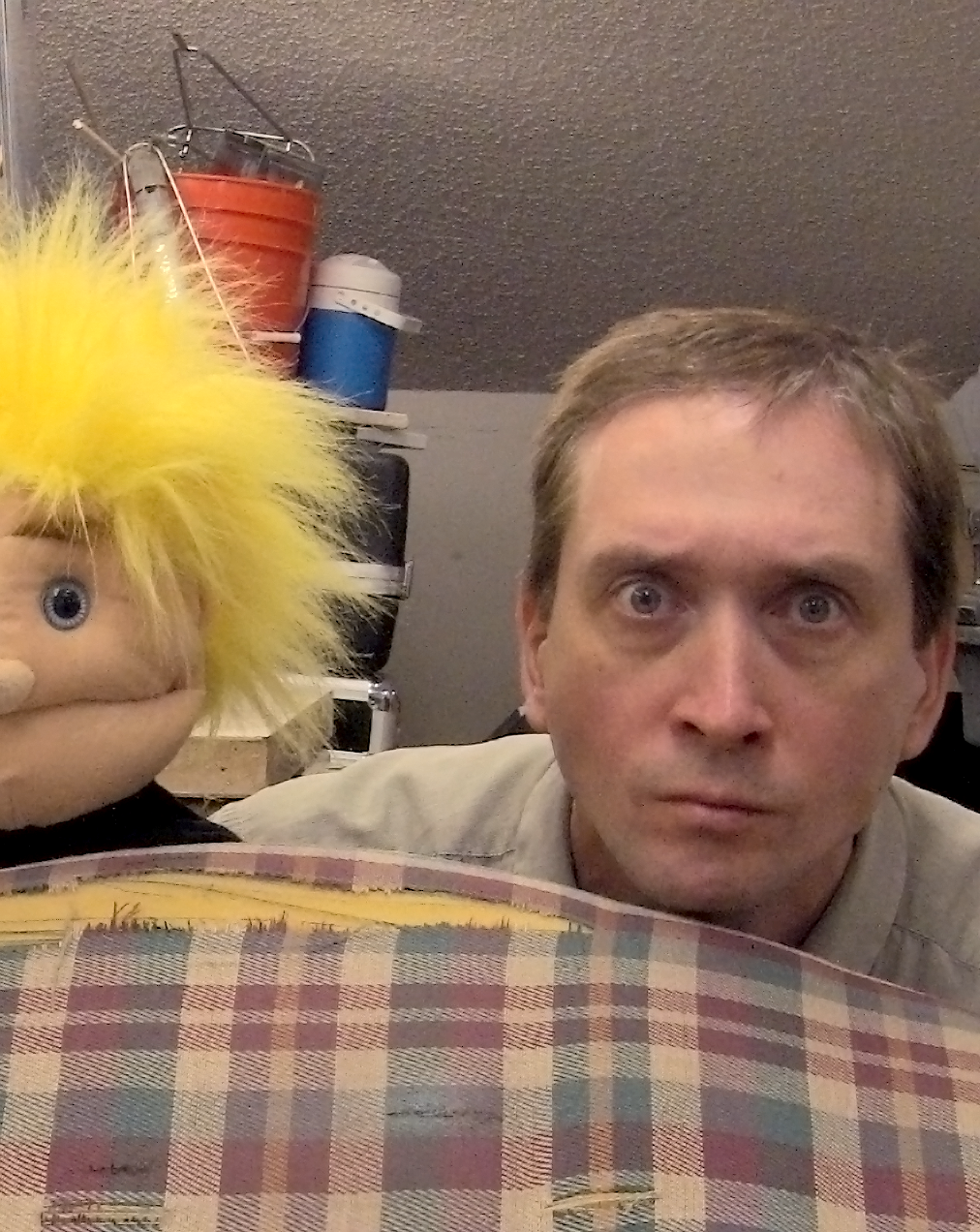
What follows is an interview with Tristan Newcomb (T.N.) and Interviewer Katherine Sweetman (K.S.)
K.S. I'd like to think I've seen some pretty strange "movies" in my days -- experimental films, internet porn, video art projects, etc. But I'm not exaggerating when I say Jesus Hates You Now is one of the strangest things I've ever seen in my whole life. What was the impetus behind creating this "movie"? Can I call it a movie?
T.N. Yes, it's definitely a movie - I always fight to keep the whole thing from drifting into pure anarchy. I make sure to fuse a narrative spine down the middle, because anarchy feels like it would just be too easy. Whatever didn't work, you'd chalk it up to breaking the rules. But nothing's easier than rule-breaking in cinema. So I always try to have a central character who's utterly sincere, and isn't being insane or funny, just very sincerely otherly-minded, as an anchor to the proceedings. I love the anti-hero protagonists who aren't just thugs or rebels, like Dr. Herbert West in the Re-Animator movies. He wasn't mad or even entirely misguided, he's just trapped in a severe difference of opinion with the world - and can never see the world as his intellectual or scientific equal. I had always wanted to do a cult deprogramming movie, after seeing Ticket to Heaven long ago. But I couldn't do anything that had any content overlap with Ticket to Heaven. That movie has been so plundered, as well as the Moonie cult it's based on. There's a whole cartload of cult tropes now: the ranch or farm location, the sleep deprivation, the gradual malnutrition, the brainwashing through zealous chanting. Even The Simpsons had an episode with all that. I couldn't touch any of it. The only common item is when I make mention that there's a Korean Reverend behind it all - which is a Moonie riff, of course. But I've used puppets in other films, so I thought, what if my deprogrammer used abusive puppetry? Could I get a proper Ticket to Heaven meets Jim Henson blend, but completely reverse expectations on both?
K.S. Without giving away major plot points, can you tell me a little bit about Jesus Hates You Now?
T.N. Usually, the cult deprogrammers in movies work directly with the family. They have the cultist sequestered in a room in the family house, only a mattress on the floor, no sharp objects around, no ways to escape, and then they just try drilling the cultist with facts, usually about the cult's criminal background and nefarious intent and such. So I flipped that entire paradigm on its head. It's everything that you would expect a cultist deprogramming NOT to be. Without giving away too much, let's just say my deprogrammer character is a big B.F. Skinner fan, and he was also a birthday party puppeteer in Austria - though he's from the states. I couldn't give him an accent because the Dr. Gavin H. Grant character was already in the last movie, There Was Once a Bitter Bastard. And you can't really do puppet-based torture scenes with a human effecting a German-sounding accent without inducing terrible flashbacks of the Mel Brooks scene in The Muppet Movie. Nearly everyone's watched The Muppet Movie at least once in their life, so it's still all up there in the synapses, including Mel Brooks torturing Miss Piggy with spittle and bad jokes. I'm sure everyone would have felt, hmmmm, there's something familiar about this...
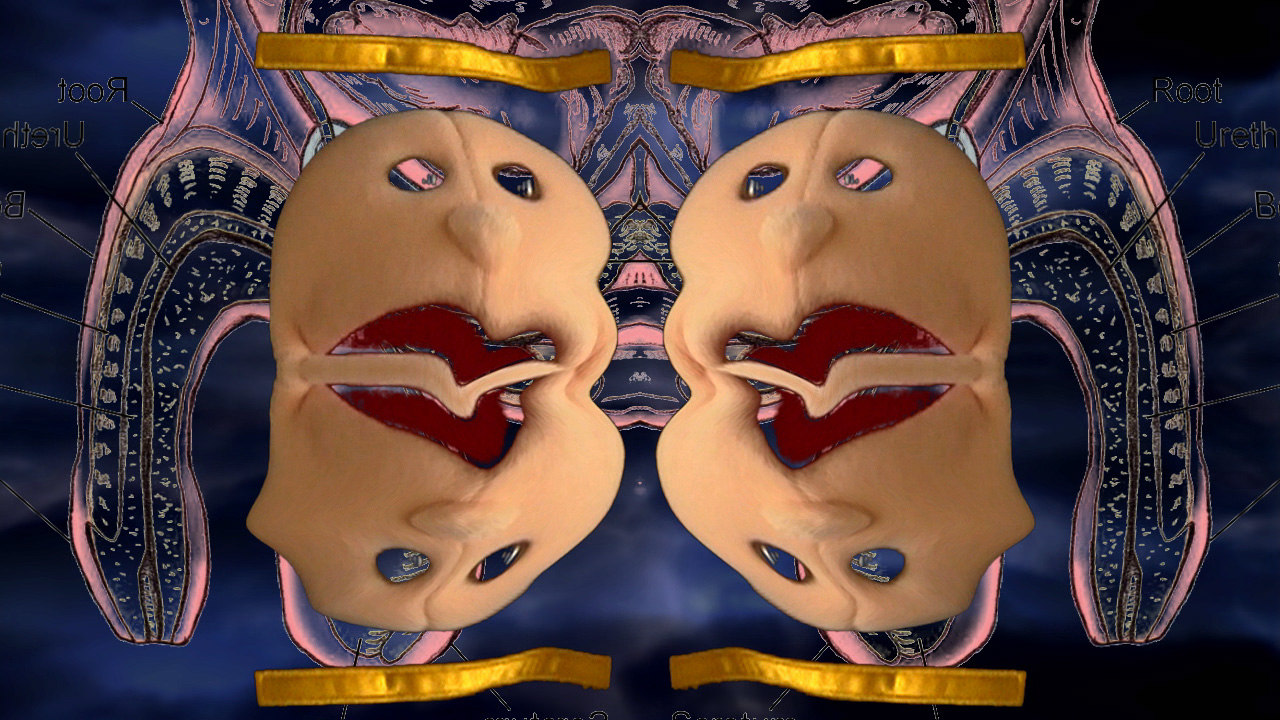
K.S. So many questions spinning in my brain: white rabbit, the farmhouse, PENIS MUTATIONAL. But let me first go with this one first because you mentioned your "last movie", how many feature length puppet films have you made?
T.N. I've done four....Sword of Digestive Calmness, Only Interstellar Pinball Lives Forever, Summer of the Chew Toy Soul, and Jesus Hates You Now. And two that were non-puppet, GRRF: The Sound of Suicide Postponement, and There Was Once a Bitter Bastard. And about 40-50 shorts before that, mostly puppet flavored.
K.S. Wow. So this is an obsession -- I mean ... as all worth while art should be. That's true devotion and time commitment. Your production quality is really nice. I mean cinematography, sound design, music, narration, effects, etc., they are all done really nicely. And from what I gather you do about 99% of it on your own, is that right?
T.N. Can't thank you enough - that's so damn good to hear, you have no idea. Or maybe you do. Yeah, it gets rather novelist these days. It's so single-person-in-solitude now with indie digital. It's like Proust writing his massive novel in his bedroom. That much removed from the world outside. I made a rough calculation once, and each of the feature-length flicks takes between 1000-1250 hours. And over half that number is spent editing and post-producing. Writing and rewriting is the other big chunk. Actually shooting is the most anxiety-fueled and exhausting part, but it takes only a fraction of the time. So that ratio still holds over from studio movies, it seems. But I think you're right, the obsession has to be there with existential puppet cinema. There's no putting on puppets and goofing with friends, no improv, very few times you even break a smile. To get these existential puppet flicks to look like cinema, real visual-craft cinema, it takes a stream of continuous, caffeinated concentration, and if you're really enjoying yourself then something's wrong. It's like Henson, but without the camaraderie or money or playful characters. God, I need a drink....
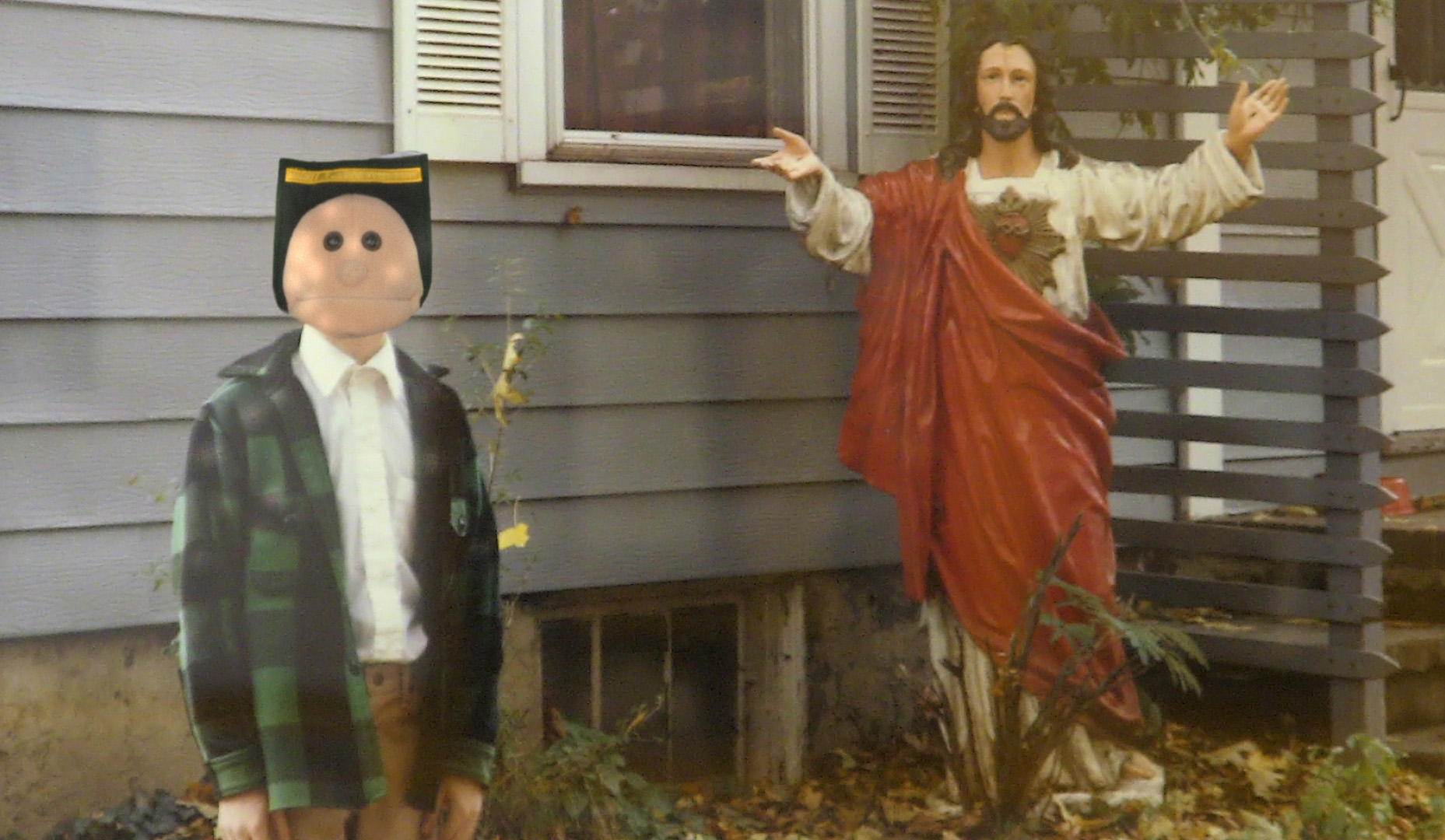
K.S. I guess I should ask, why puppets? When did you start using them and what's the reason for casting in your films -- rather than using humans?
T.N. At first, doing short films with puppets was just a way to be experimental, trying to make them seem serious in bizarre situations. Then it became a sort of niche to aim at, deadpan puppet movies with strange philosophies. And then it became entirely necessary over an eight month shoot to generally use puppets. The feature-length movies just took too long. I still would have used puppets, I think - but I can never really know. Human participants on a zero-budget shoot that goes on for months, it's like herding cats. Having people flake adds such bitterness to the whole thing. There's no money coming from anywhere to smooth over anything, or to keep anyone attached. The problem is, once you go puppet, it's hard to go back. They become addicting in their vesselness, like animation characters. You can say what you want, how you want, whenever you want - and people generally like puppets, although they don't take them seriously, which is the barrier. You can't blame anyone for that, after so much Henson for so long. Frank Oz ended up working with some amazing actors, but he's probably The One.
K.S. Can I ask why you are (now) invested in the feature-length format? It seems like you're giving the middle finger to so many other constraints in film making. Why not abandon the feature and do something, I don't know, 5 minutes or 5 hours?
T.N. When you settle down to do something feature-length, you live with it for so long, you unearth so many more tangential ideas. You get to forge all sorts of wild chains of cause and effect. When you do a short, the finish line is right there. You can see its final form pretty clearly. But doing feature-length, the finish line is usually so far off, you can choose so many crazy paths to get there. I tend to write, shoot, and post-produce my movies roughly ten minutes at a time. It's like Tetris filmmaking. Always changing the next piece based on what the shape of the last piece turned out to be - which can be so different than the script. But if I went off into the land of five-hour movies, the temptation to chop it up into episodes would be irresistible. I couldn't sit on 90 minutes worth of movie while I finished up the other 210, I'd go mad. It was enough agony just to break away from doing shorts. And anything over two hours and I'd have all these alarm bells in my head that I'm being way too self-indulgent. I mean, what would a five-hour Spalding Gray monologue have been like? Anything over an hour is already such a lot to ask of someone, when you think about it. Unless you're a series with a bunch of great writers keeping you going. If they ever stop doing Peep Show, I'm going into mourning.
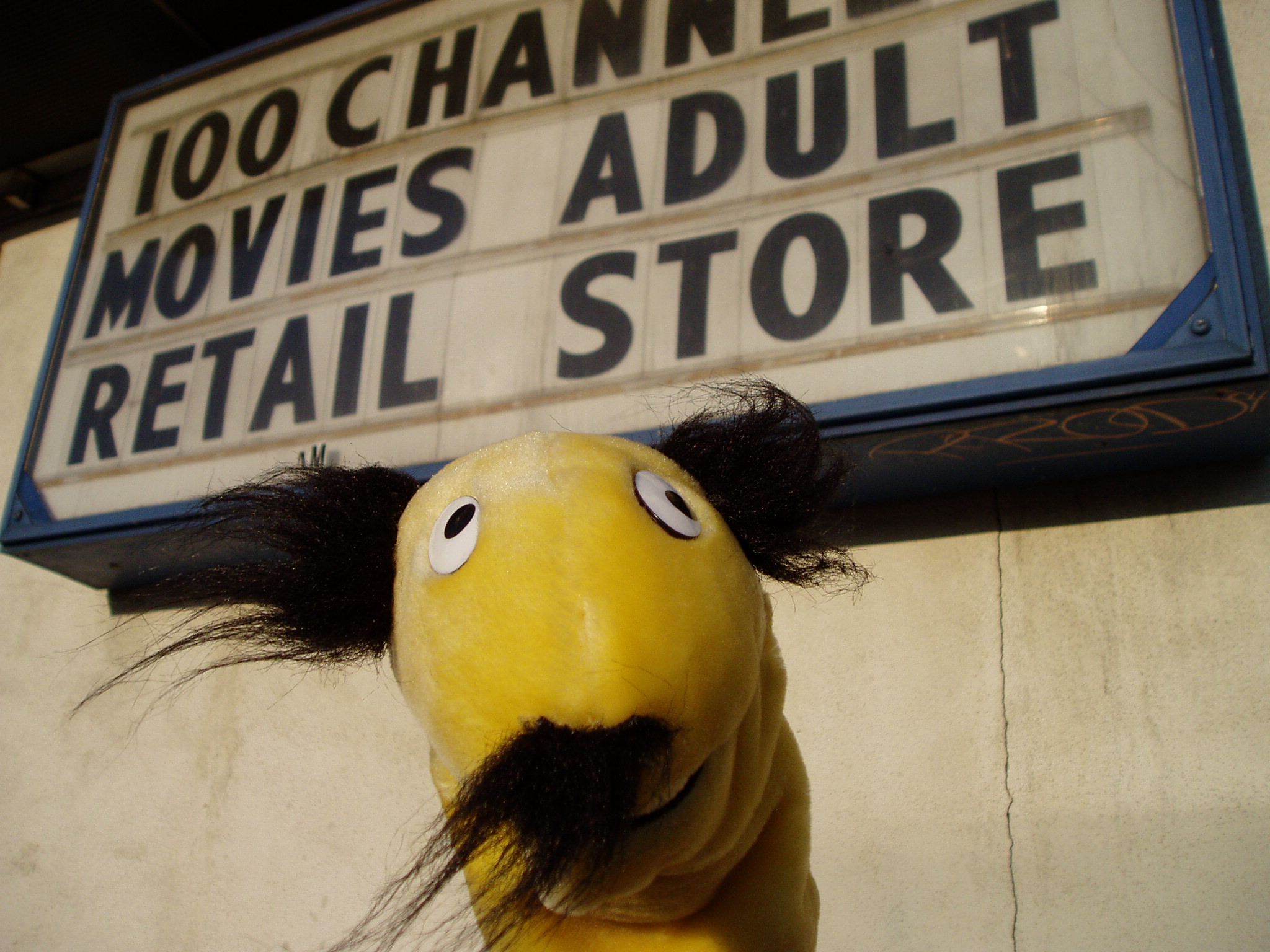
K.S. What's next for you? Are you already on the next project?
T.N. Yup. Shooting the first scenes in about a week. Another oblivious-sociopath rags-to-rags story, utilizing a modified banana slug puppet from UC Santa Cruz. -- Keep up with Tristan and his puppets at Lumalin productions
Wednesday, March 13, 2013
Anything for You IN PRODUCTION.
Anything for You
A new mythology of witchcraft begins.
In 3D.
Find more images and info on Facebook
A new mythology of witchcraft begins.
In 3D.
 |
| 3D Witch Party - photo by James Humann |
 |
| 3D Witch Party - photo by James Humann |
Find more images and info on Facebook
Road to the Cage On Demand and On Xfinity
Road to the Cage 3D - available On Demand and On Xfinity 3D

"Road to the Cage 3D" follows two MMA fighters for 30 days on the rigorous mental and physical journey to the culminating main event-- the cage fight
Watch it on demand: Time Warner, Cox, Bright House and live Xfinity 3D
Saturday, January 26, 2013
Cerberus Motorcycles at The Egyptian Garage
Reposted from Reviewer Magazine

The Egyptian Garage is a handsome 1920's concrete building with a uniquely... um, Egyptian facade (classic example of Egyptian Revival architecture). For one thing, faux columns with Pharaoh heads line the sides of the sand color structure that's somewhat reminiscent of The Great Pyramids. The building's interior is a large, open 4,000 square foot space with beautiful high arced ceilings, exposed wooden beams and an enormous skylight. Natural light filters through the windows and bay doors (when open) and light up the space that now houses an innovative new motorcycle start-up called Cerberus Motorcycles. Cerberus- in mythology, is the three headed dog figure that guards the gates to the underworld, but this garage (guarded only by two friendly pet dogs), is a custom motorcycle repair and assembly shop complete with eight motorcycle work bays, a separate engine building space, a metal working space, an electrical work station, an upholstery sewing area, motorcycle storage area, and a lot of comfortable hang out-space. These guys love motorcycles. That's evident. The bikes line the walls and stand out like artwork on pedestals in the work bays. The space is just a fun place to hang out. And the men responsible for this motorcycle haven are co-owners are Dave Hargreaves and Erik Borowitz.
 Dave is the shops' master mechanic. With over 27 years experience working with motorcycles, the man can do just about anything. He has run service shops and worked with design teams for such companies such as Harley, Honda and Confederate Motorcycles. Dave's experience is matched by Erik's passion, hard work, and love of motorcycles. For the past few years Erik had dedicated his free time to designing, building, and customizing motorcycles.
After hunting around San Diego for months, they finally found their dream building at the City Heights landmark known as the Egyptian Garage. Although Cerberus Motorcycles has only been in this remarkable space since September (with official Grand Opening in December) the space is already buzzing with activity.
The first thing to know is that this is not a typical motorcycle repair shop.
Dave is the shops' master mechanic. With over 27 years experience working with motorcycles, the man can do just about anything. He has run service shops and worked with design teams for such companies such as Harley, Honda and Confederate Motorcycles. Dave's experience is matched by Erik's passion, hard work, and love of motorcycles. For the past few years Erik had dedicated his free time to designing, building, and customizing motorcycles.
After hunting around San Diego for months, they finally found their dream building at the City Heights landmark known as the Egyptian Garage. Although Cerberus Motorcycles has only been in this remarkable space since September (with official Grand Opening in December) the space is already buzzing with activity.
The first thing to know is that this is not a typical motorcycle repair shop.
The front page of their website clearly states:
 Looking for a service shop? That is not us. Become a member and do it yourself. We offer you a workbench, a lift, use of our tools, guidance, and much more...
One of the main attractions here at Cerberus is that YOU can work on your own bike as well as LEARN to work on your own bike. And, if you become a member, you get access to not only the shop but to a whole motorcycle community. And you get to hang out here. This, for me, is the best part. "People who are mechanically inclined, that wanna learn how to do their own maintenance, we provide a bay, a work bench and tools, guidance and also discount on parts," says co-ower Erik Borowitz. "But, yes, we can also do it for you."
Admittedly, most of the work they currently do is for people who drop-off their bikes, but if it's for a custom build, Erik and Dave work directly with the customers to design what they want. If it's maintenance and restoration work they will show the customer exactly what the work entails -- they will show and explain the mechanical procedure (if the customer is interested). And get them involved.
"We don't just build them something," says master mechanic Dave Hargreaves says. "We collaborate with them to develop the product they are after -- we discuss the feasibility, the reality of the project, then build it."
"If they're not involved hands-on directly with the build of the motorcycle, at least they've got some input on it."
The co-owners both admit it's counter intuitive, for them, to want the customers to do work they could pay to have done, but Dave and Erik would prefer to show people how to work on repairs than do it themselves.
"We steer away from doing things like oil changes and minor adjustments," Erik says. "If someone wants a simple tune up, I have a book over there that tells you how to do it, and I have the tools to loan you, and the expertise to guide you in the right direction."
They both stress the importance of knowing how to work on one's own motorcycle and knowing how a motorcycle actually works. "If it's older than 10 years, most of the dealerships won't touch them," Dave says, while shaking his head.
"If you own and ride an older bike, you need to know how to work on it, and that's part of the reason we're doing what we're doing, so we can teach people."
The most exciting thing Cerberus Motorcycles does is not maintenance and repairs but the custom building and restoration of older motorcycles to turn them into completely different, completely customized, completely unique new rides.
"You could go get a thirty thousand dollar stock Harley, or you could spend a fraction of that and get a fully customized motorcycle that's built however you want," Erik says.
With the exception of one large Harley Davidson, all the bikes in the active work bays look sleeker and lighter than most motorcycles on the road. They are largely dark, matte black in color with exposed shiny engine parts and custom sewn seat covers. They look cool, they look fast, they look classy, and they definitely look custom. Don't worry scooter and moped owners, you will not be turned away.
"If it's got two wheels and a motor, yeah," Dave says. "We'll work on it."
Cerberus Motorcycles is developing its own unique style. The trained eye could potentially start to spot motorcycles customized here. Wheel conversions are a regular project at the shop. The heavy and outdated stock wheels are taken off and replaced with a newer style of wheels and tires. Then upgrades to modern braking and suspension systems are possible. The wider, stickier, tires get better performance, better acceleration and better braking. The shop has developed their own custom wheel conversion kits, bracketing kits, and mounts. They are also creating custom seat pans and in-shop, hand-sewn, custom upholstered seats. Seamstress, Jennifer Gardner, creates seats as well as tool bags, and other one of a kind items for the bikes.
"Restore is not the right word for what we do here," Erik says. "Because we are not going to make it like it originally was -- our bikes perform better, are more reliable, and look classier."
"We rebuild engines, we give the bikes better performance, we put modern Sport Bike wheels on them, modernize the suspension and braking systems, and we completely update the electrical systems, we line the tanks so that they don't rust, we paint, do the body work, rebuild seats from scratch, redo gauges, and kinda simplify things."
Ready to take the next step and take your bike in or get a bike to work on? Join them for Moto Mondays.
Cerberus Motorcycles has a weekly meet and greet, every Monday after 5pm (running generally 5-9pm). If you're interested in joining the shop, having your bike worked on, or in getting to know this shop and all it has to offer, you can stop by on Monday for an informal information session. "Sometimes it's just us working on bikes, sometimes it's a full-blown Barbecue," Erik says. "It just depends on what we're doing and how busy we are, but yeah, anyone should feel encouraged to come down, throw something on the grill and share a beer."
You can of course also contact shop via:
Website: http://cerberusmoto.com/
Phone: (619) 980-9377
Email: info@cerberusmoto.com
Cerberus Motorcycles at The Egyptian Garage
The Egyptian Garage is a handsome 1920's concrete building with a uniquely... um, Egyptian facade (classic example of Egyptian Revival architecture). For one thing, faux columns with Pharaoh heads line the sides of the sand color structure that's somewhat reminiscent of The Great Pyramids. The building's interior is a large, open 4,000 square foot space with beautiful high arced ceilings, exposed wooden beams and an enormous skylight. Natural light filters through the windows and bay doors (when open) and light up the space that now houses an innovative new motorcycle start-up called Cerberus Motorcycles. Cerberus- in mythology, is the three headed dog figure that guards the gates to the underworld, but this garage (guarded only by two friendly pet dogs), is a custom motorcycle repair and assembly shop complete with eight motorcycle work bays, a separate engine building space, a metal working space, an electrical work station, an upholstery sewing area, motorcycle storage area, and a lot of comfortable hang out-space. These guys love motorcycles. That's evident. The bikes line the walls and stand out like artwork on pedestals in the work bays. The space is just a fun place to hang out. And the men responsible for this motorcycle haven are co-owners are Dave Hargreaves and Erik Borowitz.
Dave is the shops' master mechanic. With over 27 years experience working with motorcycles, the man can do just about anything. He has run service shops and worked with design teams for such companies such as Harley, Honda and Confederate Motorcycles. Dave's experience is matched by Erik's passion, hard work, and love of motorcycles. For the past few years Erik had dedicated his free time to designing, building, and customizing motorcycles.
After hunting around San Diego for months, they finally found their dream building at the City Heights landmark known as the Egyptian Garage. Although Cerberus Motorcycles has only been in this remarkable space since September (with official Grand Opening in December) the space is already buzzing with activity.
The first thing to know is that this is not a typical motorcycle repair shop. The front page of their website clearly states:
Looking for a service shop? That is not us. Become a member and do it yourself. We offer you a workbench, a lift, use of our tools, guidance, and much more...One of the main attractions here at Cerberus is that YOU can work on your own bike as well as LEARN to work on your own bike. And, if you become a member, you get access to not only the shop but to a whole motorcycle community. And you get to hang out here. This, for me, is the best part. "People who are mechanically inclined, that wanna learn how to do their own maintenance, we provide a bay, a work bench and tools, guidance and also discount on parts," says co-ower Erik Borowitz. "But, yes, we can also do it for you."
Admittedly, most of the work they currently do is for people who drop-off their bikes, but if it's for a custom build, Erik and Dave work directly with the customers to design what they want. If it's maintenance and restoration work they will show the customer exactly what the work entails -- they will show and explain the mechanical procedure (if the customer is interested). And get them involved.
"We don't just build them something," says master mechanic Dave Hargreaves says. "We collaborate with them to develop the product they are after -- we discuss the feasibility, the reality of the project, then build it."
"If they're not involved hands-on directly with the build of the motorcycle, at least they've got some input on it."
The co-owners both admit it's counter intuitive, for them, to want the customers to do work they could pay to have done, but Dave and Erik would prefer to show people how to work on repairs than do it themselves.
"We steer away from doing things like oil changes and minor adjustments," Erik says. "If someone wants a simple tune up, I have a book over there that tells you how to do it, and I have the tools to loan you, and the expertise to guide you in the right direction."
They both stress the importance of knowing how to work on one's own motorcycle and knowing how a motorcycle actually works. "If it's older than 10 years, most of the dealerships won't touch them," Dave says, while shaking his head.
"If you own and ride an older bike, you need to know how to work on it, and that's part of the reason we're doing what we're doing, so we can teach people."
The most exciting thing Cerberus Motorcycles does is not maintenance and repairs but the custom building and restoration of older motorcycles to turn them into completely different, completely customized, completely unique new rides.
"You could go get a thirty thousand dollar stock Harley, or you could spend a fraction of that and get a fully customized motorcycle that's built however you want," Erik says.
With the exception of one large Harley Davidson, all the bikes in the active work bays look sleeker and lighter than most motorcycles on the road. They are largely dark, matte black in color with exposed shiny engine parts and custom sewn seat covers. They look cool, they look fast, they look classy, and they definitely look custom. Don't worry scooter and moped owners, you will not be turned away.
"If it's got two wheels and a motor, yeah," Dave says. "We'll work on it."
Cerberus Motorcycles is developing its own unique style. The trained eye could potentially start to spot motorcycles customized here. Wheel conversions are a regular project at the shop. The heavy and outdated stock wheels are taken off and replaced with a newer style of wheels and tires. Then upgrades to modern braking and suspension systems are possible. The wider, stickier, tires get better performance, better acceleration and better braking. The shop has developed their own custom wheel conversion kits, bracketing kits, and mounts. They are also creating custom seat pans and in-shop, hand-sewn, custom upholstered seats. Seamstress, Jennifer Gardner, creates seats as well as tool bags, and other one of a kind items for the bikes.
"Restore is not the right word for what we do here," Erik says. "Because we are not going to make it like it originally was -- our bikes perform better, are more reliable, and look classier."
"We rebuild engines, we give the bikes better performance, we put modern Sport Bike wheels on them, modernize the suspension and braking systems, and we completely update the electrical systems, we line the tanks so that they don't rust, we paint, do the body work, rebuild seats from scratch, redo gauges, and kinda simplify things."
Ready to take the next step and take your bike in or get a bike to work on? Join them for Moto Mondays.
Cerberus Motorcycles has a weekly meet and greet, every Monday after 5pm (running generally 5-9pm). If you're interested in joining the shop, having your bike worked on, or in getting to know this shop and all it has to offer, you can stop by on Monday for an informal information session. "Sometimes it's just us working on bikes, sometimes it's a full-blown Barbecue," Erik says. "It just depends on what we're doing and how busy we are, but yeah, anyone should feel encouraged to come down, throw something on the grill and share a beer."
You can of course also contact shop via:
Website: http://cerberusmoto.com/
Phone: (619) 980-9377
Email: info@cerberusmoto.com
Friday, November 30, 2012
Smoking Crack, Orgies, and Incest, Oh My
A Mind Blowing Book Reading at the Periscope Project by Provocateur, Writer and Poet, Jason Stoneking, on the One Night-Only San Diego Stop of His Nation-Wide Book Tour

It was a Sunday evening, and the sun was setting over downtown San Diego. On the patio of The Periscope Project, people milled about waiting for the book reading to begin. Some knew the author's previous book -- and had an idea of what they were getting into. Others had done some research on him -- and thought they knew what they were getting into. But most had no idea at all what was in store for them. Although the event was billed as "free and open to the ADULT public", no one was really, fully prepared.
Things started slow and steady -- always the mark of a good evening. The audience was treated to a base of quality prose and personal stories with beautiful and heart-felt delivery that made us all genuinely like the author, Jason Stoneking. He began reading to us from his newest book, Audience of Twelve, which was written at a fairly stable point in his life and career, but later in the evening he also read from his previous book, Audience of One, which was written at a more challenging time and is, lets just say, darker in tone and subject matter.
I will stray from my story for a moment to point out the books' structure; both books are composed of a series of story/essays, and each title was designated by someone other than the author. Someone gave Stoneking the titles, and he was then bound by the rules (of the structure of the book) to write a story for the given titles. In Audience of One visual and conceptual artist Markus Hansen feed him titles, and for Audience of Twelve there were twelve different individuals feeding him titles. The main point here is that the titles, and therefore the themes of these stories, were not chosen by Stoneking but given to him as a kind of writing assignment.

So far, so good. The evening was shaping up as a traditional kind of book reading. We took a short break to enjoy some wine and cheese. It was at this point that a woman approached Stoneking to complain about something she had read on his website. She was a mother, and she brought her drug-using son to the reading. She was upset about a particular story, from Audience of One, that she had read online, and she had come to the reading with her son to tell Stoneking how his work was irresponsible and detrimental to those, like her child, who had a problem with illicit substances. The story in question was called Crack and Stoneking subsequently decided to read this work to the audience.
So it was at this point, as the sun set and the night began to creep in, that Stoneking's stories began to take a more ADULT turn.
"I think crack cocaine gets a bad rap..." is the opening line of the story, which goes on, in a very humorous and honest way, to describe what crack is like (from a first hand experience) and to suggest that crack is not as bad as the world makes it out to be. Stoneking's piece is not a glorification of crack, per se, but more of an honest, experiential, perhaps cathartic justification of why some people might want to smoke crack.
The pointy end of the story's thesis is that crack is like a tool for extrication from reality -- and maybe not that different from others in common usage (alcohol, TV, Facebook... ). Near the stories' end Stoneking writes, "I think people look down on the crack-head not because of what he's doing, but because he's escaped the structure of what everyone else is doing."
People laughed wildly, clapped, and nodded their heads in agreement. The stories' description of and investigation into crack were so very convincing that I if a glass pipe were passed around at that moment, there would probably be a few interested parties (self included). After hearing Stoneking's description and delivery of this story, the mother, who had approached him earlier, hugged him. Then they (mother and son) purchased both of his books and left.
"Wow," I thought. What an interesting evening. But it wasn't over yet.

Egged on by the audience to continue in adult themes, Stoneking read a story titled Dude, I need to hear about the Boulder chick and the Orgy one more time -- an absolutely hysterical analysis of a kind of baffled orgy, complete with all the nakedness, strangeness, jealousies and downsides inherent in (most?) group sexual experiences.
"Dude, Jason, your girlfriend's got dank muff," is the funniest and most memorable line from this story that also begins the tales' U-turn into the dark side of things. But it was when Stoneking was deciding what to read that would satisfy this audiences' apparent desire for adult themes that he happened to mention another dark story from Audience of One-- "The Aristocrats" story.
Some members of the audience who had read this story made some noise (one of them was me), and the rest of the audience became curious by the Stoneking's reluctance to share it. He continued on with other stories and said something like, maybe he would read it at the end, but it had been a serious source of controversy, and he wasn't sure it was a good idea.
Now, the audience was intrigued.
It's true that Stoneking's version of "The Aristocrats" actually titled, The Famous Joke. Version: Jason Stoneking, was indeed so problematic that it almost caused the book not to be published and engendered much debate about whether it could be included. In the book, the story comes with its own disclaimers:
"Publisher’s note: This piece is a version of an old and well- known dirty joke that traditionally aims to shock, offend and disgust, and is here written in the spirit of satire. Neither the author nor the publisher intends to advocate, glorify or condone any of the acts that are depicted therein."
At the reading, the story also came with many disclaimers by the author, but each just seemed to intensify the curiosity.
I should break from my story, again, to point TO the famous joke,"The Aristrocrats", if you have not heard it, and the documentary about this joke if you have not seen it. Commedians such as Chris Rock, Drew Carey, Bob Saget and so many more have done it, and the infamous joke is not told for the humor of the punch line but for the shock value of the scenes that happen before the punch line. The audience at The Periscope Project seemed to be split on their ability to recall the joke, but they knew they wanted to hear this story-- whatever it was. Stoneking was hesitant, but he eventually gave in and began reading.
His story is told in the first person: I being the father of a poor family. And I believe this sets up some of the intimacy and subsequent horror the audience may feel upon its telling (especially in person). We had been listening to Stoneking's personal, first person stories all night. Now we were listening to him put himself into this fictional story, and we identified I with this sweet, funny, and vulnerable man before us.
Since shock value is the ultimate goal of each telling of this tale, Stoneking success was marked by our shock. The game of rehashing the joke is that each time its told, it gets worse-- and the game was played well. The story/joke in a nutshell: A poor family needs money; they go to an evil man in the entertainment industry to see if they can do a performance to earn them money; the evil entertainment exec gets them (the family) to do various kinds of perverse, abject and weird sex acts with each other; the punch line is that the title of their performance is "The Aristocrats" (play on the tradition of the aristocracy using incest to keep the power in the family).
Stoneking's version takes the audience on a horrific and graphic journey into this joke's story. It goes into disturbing details that really bring the reader, or listener in this case, into the story. We can relate to the pathetic father who must perform these incestuous acts on the daughter-- acts that we could hardly imagine, but all of a sudden we are there in the father's shoes. We are the mother performing deviant acts on our own son. And we relate to and with the characters because Jason Stoneking has such a compelling way of luring us on, against our will, from sentence to sentence. The horror story (14 pages long in the book) goes on, and on, and it fills us with disgust for ourselves for even thinking such things and picturing such mayhem.
The audience at The Periscope Project fell silent. We all suddenly become very self-conscious. We sat on the ends of our seats passing only surreptitious, sideways glances around the room. After the story, people either loved author Jason Stoneking or hated him. There was no in between. He had taken us somewhere very dark and uncomfortable, and then he left us there to witness the manifestations of this discomfort and shock -- in a group setting. Most of the audience clapped. Most stayed to have a glass of wine, shake the author's hand, and purchase a book. But some absolutely couldn't handle it; even though they had stayed late and enjoyed themselves before this story, they left angry and/or confused after this story. One woman refused to shake the author's hand when he extended it to her. He had shocked us to our very cores -- a difficult thing to do in this day and age when sex scandals, internet porn, and nightly news atrocities give us all the graphic stories and images we could ever imagine.
But these moments of uncomfortable and emotionally heightened realization (those moments of being shocked) are very interesting to reflect upon. Of course "going against the norm" (and having the capacity to cause shock) has been done in all manner of art forms since there were rules to be broken. My obvious example choices are Duchamp, Picasso, Shakespeare -- they all shocked their critics. Shock can cause anger, hostility, confusion, but then gives us a chance for reflection and greater awareness once the object or idea causing shock has been examined. Was Duchamp's Fountain really offensive or was it a work of art that changed the way the world thought about art? Picasso's Les Demoiselles d'Avignon outraged the Paris Art Scene, and Cubism was instantly shrouded in controversy. Shakespeare left devout critics up in arms with works like Macbeth that portrayed religious controversy in all of its horrors. But these are the most discuss, most written about, most influential works of art in the world. Shock causes discussions -- sometimes with others, sometimes internal discussions (like the one I am having with myself as I write this) and these help us to better understand ourselves, perhaps learn something about our own beliefs, and facilitate the asking of some very complex questions not only about ourselves but about the world, censorship, morality, and art.
And on a more basic level, when I personally read something dark and twisted handled by a gifted author (like Stoneking), and it's something that I don't really want to be experiencing, but I am compelled to keep reading against my morally-conscious, left brain-reasoning, I think, "Wow this is a talented author."
And that's is exactly what I was thinking on this particular evening.
Jason Stoneking is very a talented author. He was capable of forcing all kinds of intense emotions upon his audience. That night his memorizing, hilarious, and painfully honest works horrified me, they've brought tears to my eyes, and I damn near pissed my pants a few times from laughing so hard. That's exactly what a good author should do, and that's exactly what a good book reading should be like.
-Katherine Sweetman
Want to read the stories yourself?
Buy the books:
http://www.jasonstoneking.com/books.html

It was a Sunday evening, and the sun was setting over downtown San Diego. On the patio of The Periscope Project, people milled about waiting for the book reading to begin. Some knew the author's previous book -- and had an idea of what they were getting into. Others had done some research on him -- and thought they knew what they were getting into. But most had no idea at all what was in store for them. Although the event was billed as "free and open to the ADULT public", no one was really, fully prepared.
Things started slow and steady -- always the mark of a good evening. The audience was treated to a base of quality prose and personal stories with beautiful and heart-felt delivery that made us all genuinely like the author, Jason Stoneking. He began reading to us from his newest book, Audience of Twelve, which was written at a fairly stable point in his life and career, but later in the evening he also read from his previous book, Audience of One, which was written at a more challenging time and is, lets just say, darker in tone and subject matter.
I will stray from my story for a moment to point out the books' structure; both books are composed of a series of story/essays, and each title was designated by someone other than the author. Someone gave Stoneking the titles, and he was then bound by the rules (of the structure of the book) to write a story for the given titles. In Audience of One visual and conceptual artist Markus Hansen feed him titles, and for Audience of Twelve there were twelve different individuals feeding him titles. The main point here is that the titles, and therefore the themes of these stories, were not chosen by Stoneking but given to him as a kind of writing assignment.

So far, so good. The evening was shaping up as a traditional kind of book reading. We took a short break to enjoy some wine and cheese. It was at this point that a woman approached Stoneking to complain about something she had read on his website. She was a mother, and she brought her drug-using son to the reading. She was upset about a particular story, from Audience of One, that she had read online, and she had come to the reading with her son to tell Stoneking how his work was irresponsible and detrimental to those, like her child, who had a problem with illicit substances. The story in question was called Crack and Stoneking subsequently decided to read this work to the audience.
So it was at this point, as the sun set and the night began to creep in, that Stoneking's stories began to take a more ADULT turn.
"I think crack cocaine gets a bad rap..." is the opening line of the story, which goes on, in a very humorous and honest way, to describe what crack is like (from a first hand experience) and to suggest that crack is not as bad as the world makes it out to be. Stoneking's piece is not a glorification of crack, per se, but more of an honest, experiential, perhaps cathartic justification of why some people might want to smoke crack.
"For most of them [guys Stoneking used to smoke with], if they ever got off the pipe, the only thing waiting
for them – in the sober light of day – would be a precarious dead-end
job as a janitor or a fry cook. And I couldn't look one of them in the
eye and say that either of those titles was any more luxurious than
crack-head."
The pointy end of the story's thesis is that crack is like a tool for extrication from reality -- and maybe not that different from others in common usage (alcohol, TV, Facebook... ). Near the stories' end Stoneking writes, "I think people look down on the crack-head not because of what he's doing, but because he's escaped the structure of what everyone else is doing."
People laughed wildly, clapped, and nodded their heads in agreement. The stories' description of and investigation into crack were so very convincing that I if a glass pipe were passed around at that moment, there would probably be a few interested parties (self included). After hearing Stoneking's description and delivery of this story, the mother, who had approached him earlier, hugged him. Then they (mother and son) purchased both of his books and left.
"Wow," I thought. What an interesting evening. But it wasn't over yet.

Egged on by the audience to continue in adult themes, Stoneking read a story titled Dude, I need to hear about the Boulder chick and the Orgy one more time -- an absolutely hysterical analysis of a kind of baffled orgy, complete with all the nakedness, strangeness, jealousies and downsides inherent in (most?) group sexual experiences.
"Dude, Jason, your girlfriend's got dank muff," is the funniest and most memorable line from this story that also begins the tales' U-turn into the dark side of things. But it was when Stoneking was deciding what to read that would satisfy this audiences' apparent desire for adult themes that he happened to mention another dark story from Audience of One-- "The Aristocrats" story.
Some members of the audience who had read this story made some noise (one of them was me), and the rest of the audience became curious by the Stoneking's reluctance to share it. He continued on with other stories and said something like, maybe he would read it at the end, but it had been a serious source of controversy, and he wasn't sure it was a good idea.
Now, the audience was intrigued.
It's true that Stoneking's version of "The Aristocrats" actually titled, The Famous Joke. Version: Jason Stoneking, was indeed so problematic that it almost caused the book not to be published and engendered much debate about whether it could be included. In the book, the story comes with its own disclaimers:
"Publisher’s note: This piece is a version of an old and well- known dirty joke that traditionally aims to shock, offend and disgust, and is here written in the spirit of satire. Neither the author nor the publisher intends to advocate, glorify or condone any of the acts that are depicted therein."
At the reading, the story also came with many disclaimers by the author, but each just seemed to intensify the curiosity.
I should break from my story, again, to point TO the famous joke,"The Aristrocrats", if you have not heard it, and the documentary about this joke if you have not seen it. Commedians such as Chris Rock, Drew Carey, Bob Saget and so many more have done it, and the infamous joke is not told for the humor of the punch line but for the shock value of the scenes that happen before the punch line. The audience at The Periscope Project seemed to be split on their ability to recall the joke, but they knew they wanted to hear this story-- whatever it was. Stoneking was hesitant, but he eventually gave in and began reading.
His story is told in the first person: I being the father of a poor family. And I believe this sets up some of the intimacy and subsequent horror the audience may feel upon its telling (especially in person). We had been listening to Stoneking's personal, first person stories all night. Now we were listening to him put himself into this fictional story, and we identified I with this sweet, funny, and vulnerable man before us.
Since shock value is the ultimate goal of each telling of this tale, Stoneking success was marked by our shock. The game of rehashing the joke is that each time its told, it gets worse-- and the game was played well. The story/joke in a nutshell: A poor family needs money; they go to an evil man in the entertainment industry to see if they can do a performance to earn them money; the evil entertainment exec gets them (the family) to do various kinds of perverse, abject and weird sex acts with each other; the punch line is that the title of their performance is "The Aristocrats" (play on the tradition of the aristocracy using incest to keep the power in the family).
Stoneking's version takes the audience on a horrific and graphic journey into this joke's story. It goes into disturbing details that really bring the reader, or listener in this case, into the story. We can relate to the pathetic father who must perform these incestuous acts on the daughter-- acts that we could hardly imagine, but all of a sudden we are there in the father's shoes. We are the mother performing deviant acts on our own son. And we relate to and with the characters because Jason Stoneking has such a compelling way of luring us on, against our will, from sentence to sentence. The horror story (14 pages long in the book) goes on, and on, and it fills us with disgust for ourselves for even thinking such things and picturing such mayhem.
The audience at The Periscope Project fell silent. We all suddenly become very self-conscious. We sat on the ends of our seats passing only surreptitious, sideways glances around the room. After the story, people either loved author Jason Stoneking or hated him. There was no in between. He had taken us somewhere very dark and uncomfortable, and then he left us there to witness the manifestations of this discomfort and shock -- in a group setting. Most of the audience clapped. Most stayed to have a glass of wine, shake the author's hand, and purchase a book. But some absolutely couldn't handle it; even though they had stayed late and enjoyed themselves before this story, they left angry and/or confused after this story. One woman refused to shake the author's hand when he extended it to her. He had shocked us to our very cores -- a difficult thing to do in this day and age when sex scandals, internet porn, and nightly news atrocities give us all the graphic stories and images we could ever imagine.
But these moments of uncomfortable and emotionally heightened realization (those moments of being shocked) are very interesting to reflect upon. Of course "going against the norm" (and having the capacity to cause shock) has been done in all manner of art forms since there were rules to be broken. My obvious example choices are Duchamp, Picasso, Shakespeare -- they all shocked their critics. Shock can cause anger, hostility, confusion, but then gives us a chance for reflection and greater awareness once the object or idea causing shock has been examined. Was Duchamp's Fountain really offensive or was it a work of art that changed the way the world thought about art? Picasso's Les Demoiselles d'Avignon outraged the Paris Art Scene, and Cubism was instantly shrouded in controversy. Shakespeare left devout critics up in arms with works like Macbeth that portrayed religious controversy in all of its horrors. But these are the most discuss, most written about, most influential works of art in the world. Shock causes discussions -- sometimes with others, sometimes internal discussions (like the one I am having with myself as I write this) and these help us to better understand ourselves, perhaps learn something about our own beliefs, and facilitate the asking of some very complex questions not only about ourselves but about the world, censorship, morality, and art.
And on a more basic level, when I personally read something dark and twisted handled by a gifted author (like Stoneking), and it's something that I don't really want to be experiencing, but I am compelled to keep reading against my morally-conscious, left brain-reasoning, I think, "Wow this is a talented author."
And that's is exactly what I was thinking on this particular evening.
Jason Stoneking is very a talented author. He was capable of forcing all kinds of intense emotions upon his audience. That night his memorizing, hilarious, and painfully honest works horrified me, they've brought tears to my eyes, and I damn near pissed my pants a few times from laughing so hard. That's exactly what a good author should do, and that's exactly what a good book reading should be like.
-Katherine Sweetman
Want to read the stories yourself?
Buy the books:
http://www.jasonstoneking.com/books.html
Tuesday, November 27, 2012

Thursday, November 1, 2012
Jumpstart San Diego's film industry by contributing to the campaign that's going to build it!
HELP SAN DIEGO FILM MAKING THRIVE Contribute to indiegogo campaign before Sun Nov 25 at 11:59PM!
Summary:
San Diego filmmakers, cast and crew are tired of living in LA's shadow. We are tired of thinking we have to move to LA to make a living doing what we love. With some of the most diverse locations possible, perfect weather, a user friendly city, a massive talent pool, and lower costs/easier access to production, we have everything it takes to have a dynamic film industry that sustains our incredible talent pool. Your contribution to this campaign will start the work of building our own collaboration based film industry here in San Diego that mentors and funds up and coming talent, utilizes local cast and crew for productions, and produces BETTER stories than the recycled ideas being churned out by the Hollywood studio system.
WE ONLY HAVE 30 DAYS TO RAISE THIS MONEY SO PLEASE CONTRIBUTE NOW!
The Impact When you give to this campaign, you are not just funding one project, you are helping to start something that will have impact on the filmmaking community in San Diego for years to come. As we are able to mentor, retain and fund our talent pool here, we will be able to make larger and better productions that will attract investors, resources and talent from outside of San Diego. We funded the first year of the San Diego Student Film Festival with a crowdfunding campaign and this campaign takes what we started to the next level. Not only will we be showcasing local student talent, we will start mentoring, funding and providing resources to both student and independent filmmakers across San Diego county.
What Your Money Goes Directly To:
We have the talent, the team, the organization, the location and the vision--now all we need is the funding! When this project is funded, we will fund at least THREE LOCAL FILMS selected by a jury from pitch competitions held at the San Diego Independent Filmmaker's Consortium (SDIFC) Pitchfest and Mixers. The three locally produced film projects will be chosen by a jury and will receive rounds of funding at three stages-- production, post production and distribution. Each funded film will have a unique budget but we plan to spend 1/2 the profits of this campaign (approximately $11,000) on films selected from the pitchfest. 80% of the money funded to our chosen teams must be spent on LOCAL cast, crew and businesses. Completed films will be promoted and screened at future SDIFC Pitchfest and Mixers and at the San Diego Student Film Festival- both which are organized and funded through the new San Diego Student and Independent Film Foundation (SDSIFF). The remaining money will provide start-up costs for our the San Diego Student and Independent Film Foundation whose mission is to provide exhibition, funding, mentorship and employment opportunities for students and up and coming filmmakers across San Diego County. Start up costs include website development, staffing, design and printing of marketing material, equipment, space rental and other general operating costs. Any money we make over this amount will go towards our fundraising goal of 230,000 for the San Diego Student and Independent Film Foundation. San Diego Independent Filmmakers Consortium (SDIFC) The incredible amount of talent that we have here was made evident by the first San Diego Independent Filmmaker's Consortium's Pitchfest and Mixer on September 21, 2012. This unprecedented event was organized by our team and it brought out over 280 local filmmakers, cast and crew. We are expecting over 500 people at our next event on October 26th. These San Diego Consortium events are open to all local filmmakers, cast and crew.
The Team:
Jodi Cilley – Artistic Director Jodi Cilley is owner and operator of VideologiCo, a San Diego based video production company. As a documentary filmmaker, she has created over a dozen short documentaries. Both a videographer and teacher, she has over 8 years of experience teaching video production and currently is the lead instructor for the UCSD Extension's Digital Arts Center Video and Editing program. She also teaches intro and advanced classes at Platt College and The Media Arts Center San Diego. She has led students in the production of over 20 short documentaries, 10 short films, and a variety of PSA's, commercials, live event videos and music videos. She has a BS in Sociology from Boston College and an MBA with specializations in entrepreneurship and management from San Diego State University. As a founding member and current director of the San Diego Student and Independent Film Foundation, she is working to expand the impact of the organization to include increased exhibition, education, a job and resource fair and funding for local up and coming film talent.
Paul Giret – Co-Director and Technical Support Paul Giret, founder of the San Diego Student Film Festival, has been producing videos since high school and is an burgeoning leader in San Diego’s independent film community. Giret’s strong roots in the independent film and music scene have grown from holding a variety of roles such as the sole videographer for an underground artist collective, producer of citizen investigative journalism videos, director of over 100 public access television shows that are still being cablecast on both COX and Time Warner and music video DP and editor for independent musicians such as Lee Scratch Perry, Switchfood and OK GO. He is also the current Film Stage Director for the San Diego IndieFest. As co-founder and current president of the San Diego City College Film Society, Giret is helping bring the school’s various departments together to unite student filmmakers to utilize the school’s resources to produce high quality work.
Patric Stillman - Operations Patric has a long history with the arts, nonprofit organizations, and business operations in San Francisco, Los Angeles, and San Diego. As a founding Board Member of Media Arts Center San Diego in 1999 and called to service in 2005, Patric has been directly engaged in youth programming, media & technology education, and the annual San Diego Latino Film Festival. His extensive experience adds to the strength of he San Diego Student and Independent Film Foundation's leadership and program development. Rick Newmyer – Development and Marketing
Rick Newmyer - has over 20 years experience developing and administering programs for children, youth, and families. His work includes: administration, grant writing, fundraising, event planning, governmental relations, marketing, and communications. Rick has lectured nationally and internationally on youth development, transition-age youth, and homelessness. He is currently a Visiting Clinical Lecturer with the University of Southern California.
Melissa Cabral - Education Melissa Cabral has been working in the San Diego production and arts education field for over 5 years. After getting her degree in Advertising, with a minor in film production, she dove into the San Diego art world and became the Director of Educational Programs at Media Arts Center San Diego. There, she ran multiple educational programs including a youth media program, a community wide videography initiative, and ran the video production department. She also served as an advisory board member for the San Diego County School District. Melissa now runs her own production company, producing videos for non-profits and companies all across the nation.
Cy Kuckenbaker- Education Cy Kuckenbaker was the recipient of a Fulbright Fellowship for filmmaking in 2004 and was a U.S. Peace Corps Volunteer in Lithuania from 2000-02. He received his MFA in filmmaking from the California Institute of the Arts. His short fiction film The Orphans premiered at New York’s Museum of Modern Art in 2006 and in 2007 he produced WOOD, which won Best Doc short at the Los Angeles IFF. He worked for the U.S. State Department in Baghdad for two years to finance his first fiction film Bush League, which premiered at the Vancouver IFF in 2010 and won Best Doc Feature at the New Jersey IFF in 2011. Cy is currently a community college professor in San Diego, CA where he teaches both fiction and documentary film production. How
You Can Help Right Now To contribute to the Indiegogo campaign, you will need to set up an indiegogo account, paypal account, and then use the donate button on our project page to send your support!
Other Ways You Can Help
Even if you can't contribute financially, please spread the word about what we are doing. Even by sharing this story and vision with your friends and family you are helping to make it a reality. Please use Indiegogo's share tools to spread the message of moving film forward in San Diego. Ad Space: If your reward for supporting us includes ad space (video or images), please check this out: Videos will need to be uploaded to vimeo.com at 1280 by 720 resolution and available for download. Link to video needs to be sent to sdstudentff@gmail.com by January 10th, 2013 at the latest. Please put the word "video" in the subject line. Images will need to be a .jpg at 300 dpi -no larger than 8.5 by 11 inches and uploaded to a folder in Dropbox by January 10th, 2013. You will be sent the link after payment is received
Friday, September 28, 2012
The Photo Palace, A Photo Darkroom on Wheels
Interview with Anton Orlov -- An Analog Crusader in the Digital Age
TweetBy Katherine Sweetman
Repost from Reviewer Magazine
Try this: Create a mobile, fully functional photographic darkroom and printing studio then drive it around the country to show the world (starting with the US) that analog photography is not dead! That is what Anton Orlov did this summer.

Anton Orlov would. And he calls it The Photo Palace Bus.
It's been quite a while since I've had the pleasure of working in a darkroom. In fact, before going to check out The Photo Palace, it had been something like 12 years since I did any printing. All the labs at all the schools that I used to work at have now shut down their darkrooms and traded them in for a single black and white printer. It seemed, to me, that darkrooms had all but disappeared from the face of the earth. Until, that is, I stumbled across this exciting project. The guy has fully converted the interior of a vintage, 35-ft, yellow school bus into a classroom, darkroom, workshop space, and it's mobile. I had the pleasure of interviewing him, Anton Orlov, just after he had returned from a nation-wide, inaugural tour with The Photo Palace, and he's already gearing up to go again as soon as he can afford it.
What follows is an interview with Anton Orlov (AO) Interviewer Katherine Sweetman (KS)
KS Ok, so tell me about the Photo Palace. What is it? Where was it built and, if I may ask, how did you get the funds to build this amazing vehicle?
AO The Photo Palace Bus is a mobile darkroom dedicated to creation and preservation of traditional photographic art. Built inside a California Classic 1978 Gillig school bus, it hosts two-enlarger workspaces capable of producing B&W prints up to 16x20 inches from up to 4x5 inch negatives. The front portion is a presentation area where public can view historic and contemporary handmade photographic works. It's design will eventually allow 3-5 people to travel continually and create art while providing lectures, demos and analogue photography workshops. While originally in 1997 it was just conceptualized as my personal mobile lab, over the years of watching the slow demise of film it became clear that it could be a powerful and greatly needed educational facility.
The first stage of the conversion took place in Santa Cruz mountains at the house of Lee Kalem, an electrical engineer whose son Ryan is, like myself, an alumni of San Jose State University with a photography degree. With Ryan's help and guidance from Lee it took three and a half months of 14-hour days to conclude this first stage. The [second stage] final vision is to be complete as soon as the funding can be made available and will be a second story with two bedroom spaces and a fold-out Portrait Studio on the side of The Bus.
Originally, I was hoping to get part of the construction funded through Kickstarter, but my modest goal of $16K was met only half-way and no funds were transferred. I am very thankful to those donors who chose to re-pledge after the unsuccessful ending of the campaign and transferred a total of $3000 directly through PayPal in exchange for the same rewards that were initially offered. That comprised exactly 10% of the total spent so far on construction. The rest of the funding came directly from my personal savings made over the years while working as a photographer.
On this inaugural journey, I relied heavily on Ryan to provide half the funds needed for diesel in order to cross the country. It was decided that the first trip would be unplanned and uncharted and that we would have just enough money to go around the country, get to know the bus and gather publicity and experience. However, after he decided to leave the project two weeks into the trip, I had to improvise and sell a lot of my photo prints just to make it back to San Diego. After 80 days and 9.300 miles I made it back with a quarter tank of gas left and $37 to my name.
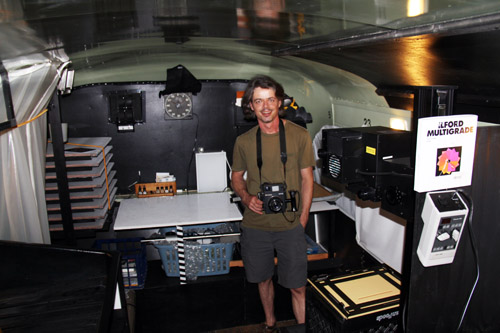
KS Even though your inaugural journey had some speed bumps, you still made an incredible distance, and I imagine you shared the project with tons of folks. Can you tell me where you went and some of the best public engagements experiences you had?
AO The trip started off with a pretty quick drive to Tennessee where this years 41st annual National Rainbow Gathering was taking place. I have been attending and documenting these sub-culture events for the past 15 years, and it was actually at my first one, in 1997, that the idea for a darkroom-bus came to me. There, I gave away about 300 8x10 gelatin silver prints that I had taken at previous gatherings -- as I have done for the past many years. I also engaged a few interested souls in a hands-on workshop involving cyanotype sun prints. The next good exposure opportunity came in Baltimore at this years Artscape event. I sold many prints and had a great time convincing the public that analogue is not dead and that Kodak is a not out of business. During the trip I found myself visiting the town of New Paltz, New York twice because a friend of mine lives not too far from it, and I was able to find a little refuge from the road at her house. The people of New Paltz were very receptive to my art, and I had dozens of visitors come through the bus. There, I also received the first small donation of chemistry and equipment.
I intend on building a large storage area on the roof of the bus behind the bedrooms to be used as a free redistribution center for used darkroom equipment. During my visit to the state of New York I visited the holy grail of all photographic museums -- the George Eastman House Museum of Photography and Film (GEH). It is the oldest photography museum in the world and houses some amazing examples of early analog photographs and equipment. I was fortunate enough to meet Mark Osterman -- the main conservator and instructor of the classes offered through the museum. These classes give the public a chance to learn many, if not all, of the historic photographic processes. Mark gave me a quick tour of the darkroom facility located in the basement of the museum and showed me a few extremely interesting examples of vintage and modern photographic works created via various manual methods. He was a true wealth of knowledge and a delight to talk to. My passion for learning was reignited by the visit to GEH, and in the future I plan on going back there as many times as needed to learn everything that Mark has to teach.
I went to Buffalo, New York and tried my best to raise the necessary funds to take an ambrotype workshop, which happened to be offered in three days. In the next two days I only raised about 60% of the funds needed, but fortunately, I happened to meet Rob McElroy -- a modern-day daguerreotypist [see: daguerreotype] and a true analog and history enthusiast. Our meeting sticks out in my memory as one of the brightest highlights of the entire trip, and it also provided the opportunity for the learning experience of a lifetime.
During our first meeting we spent nearly 9 hours in his studio, study and garage with every moment filled by Rob pulling out some obscure piece of photographic history from the stacked flat-files or camera-filled boxes. I was amazed and enchanted after holding in my own hands such relics as photogravure-filled volumes of Camera Notes magazines, full-plate autochrome plates, fantastic daguerreotypes and many more objects about the existence of which I have only read in art history books.
My second visit to Robs involved something I could have only dreamed of -- a complete demonstration of the making of a daguerreotype image with The Photo Palace Bus and me as subjects!
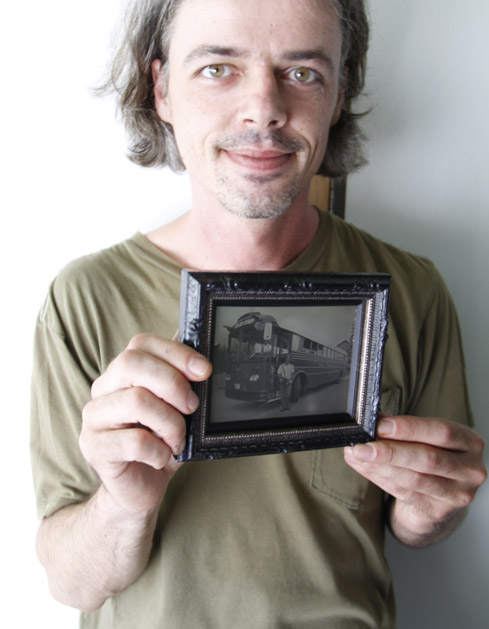
This high honor was completely unforeseen, and I am eternally grateful for that fantastic opportunity and Rob's magnanimous generosity in presenting me with one of the two resulting daguerreotypes. I spent a total of 11 hours watching over his shoulder as he went through every step involved in making a photograph using this historic method. From polishing and sensitizing the plate to mercury-fume development and framing the final image Robs love for the photographic craft was evident through his meticulous attention to detail and clear in-depth explanations of every step of the process. This is the second of the two frames that Rob produced from our photo session and the one he kept for his collection. Daguerreotype emulsion is the slowest emulsion of them all, and I had to hold this pose for one whole minute. As soon as financially possible I would love to make my way back there and take a full workshop in daguerrean photography from Rob McElroy, and I encourage everyone interested in contacting him for a workshop or a portrait session of their own as he is a true pleasure to work with.
Salem, MA saw the bus parked on a pedestrian promenade in front of Peabody Essex Museum where a beautiful collection of prints by Ansel Adams was on exhibit. I convinced museum staff to let me park Gilli [the name of the bus] there and give the interested public an idea of the environment where Ansel created his silver prints that they just viewed.
My arrival to Portland, ME luckily coincided with an art-walk event there and again I had droves of onlookers come through The Palace, and a lot of them walked away with some of my prints in hand.
Providence, RI saw me doing a little lecture to a group of high school students through New Urban Arts -- an organization committed to providing after-school arts education. Here is a link to a video. [by Providence Journal]
Another good opportunity presented itself serendipitously in Topeka, KS. I was approached to do a photography workshop through The Villages Inc. -- a place where troubled youth is rehabilitating outside the juvenile courts system. I had four students who experienced the joy of developing and printing black and white images by hand and walked away with 8x10 prints of their own portraits.
The rest of the time I was pretty much guerrilla marketing myself in various towns desperately trying to keep the tank full of gas and making documentary images during my spare time. I visited quite a few camera shops along the way and was warmly received in all of them. Many store owners also bought some of my art and some just contributed donations large and small out of pure goodness of their hearts. I was also overjoyed three times during the trip by having people recognize The Photo Palace Bus from having seen it on Kickstarter 7-8 months ago. Their enthusiasm and sense of incredulity had greatly helped buoy my spirits.
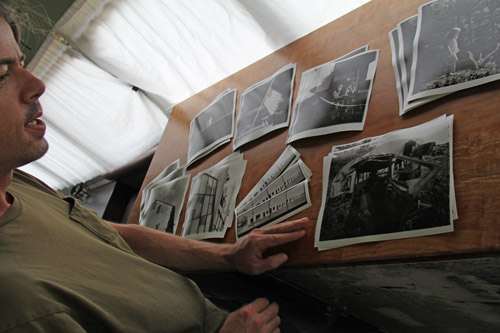
KS Ok, so, In an age of digital, digital, digital, why do you feel its so important to keep these analogue photography techniques alive?
AO The trend of faster plus cheaper plus easier equals better is bothersome to me. I personally feel that investment on the part of the artist of their patience and skill is important, and in the end it speaks through their final piece of art. When I see a finely produced gum bichromate or a gelatin silver print, I know that a certain human being was behind its creation, putting time and effort into that particular tangible object. Do you think Rodin would have worked on 3-D printers? Do you think Rafael would have used Adobe Suite? Would their works withstand the test of times as well if they did? I don't think so. Today billions of images are created daily, a vast majority of them with little or no thought. In years to come - who will value this onslaught of media? Who will take time to go though all the Flikr, Tumbler, Photobucket etc? A Renoir painting was recently bought as a lot at a flee market for $50 - it is worth over $100K. That work is unique and tactile. It withstood the test of time because of those qualities, and I know that every print I make will be there, appreciated or not, for generations after I am gone from the face of this planet. I also think that a certain level of conviction and dedication is asked of an artist when they decide to make even a simple gelatin silver print. I would hate to see that aspect of art get lost in lieu of mass produced images inundating our reality today. Every image that I produce is TOUCHED by me - that's what matters most. When it hangs on the wall of the home of someone who bought it, a part of ME hangs there with it. I think that's the most important point that makes me continue spending countless hours in the red ambiance of the darkroom.
I have seen multiple companies with a slew of wonderful products go under the digital hammer, and I would like to see, at least those that are left, offering artists of the future an opportunity to create something with their own two hands. The technology behind some of techniques of the olden days is now so far gone that people can not reproduce it no matter how hard they try. Thanks to Rob McElroy I was lucky enough to hold in my hands a few Autochrome plates during this journey. Their intrinsic beauty struck me to my core - the look is absolutely unique and every image is a singular work of art. I understand that a very rich man in Texas has been desperately trying for the past many years to revive this technology, with no success at all. The technique of Bromoil printing all but disappeared in the 50s-70s, only to be revived slightly during the 90s, but now is in danger of becoming completely extinct because bromide papers are no longer manufactured. Look at Polaroid. For years people didn't think twice about the chemical magic that went into each and every image. The Polaroid color pallet is so unique and wonderful that today people, who are used to seeing hundreds of images a day on the screens of their computers and mobile devices, are astonished and enchanted when they are confronted with a real Polaroid SX-70 image. Now it's turned into a hipster fad led by The Impossible Project -- a company with an extremely savvy advertizing department, yet struggling to come up with a single decent product that can come close in comparison to the original Polaroid quality. By god, I hope Fuji doesn't stop making their instant films -- though they have a completely different presence than the old Polaroid films, they still offer the permanency of those films and at least some instant fun with decent results.
KS I know you are still recovering, but what's in the future for the Photo Palace? If money was no object, what would you do with it and where would you go?
AO If I found a sponsor and money was no object at all, I would continually travel the US providing first-hand opportunities of learning about the rich history of photography to middle and high school students-- offering printing workshops myself as well as hosting other artist that work with techniques that I am not familiar with. I would get the second level [second story of the bus] complete for a crew of a couple of helpers who would be in charge of logistics. I would redistribute photographic equipment and help people and organizations set up their own darkrooms. I can't tell you how many times I've been offered a free darkroom set during this journey and then in the next town I meet someone who can't afford to get one but would love to. I would get the studio set up and provide portraiture workshops using various cameras and natural lighting styles. That studio would also be used to create an egalitarian cross-cultural portrait series with free prints provided for anyone who stepped within its bounds. And THE BIG ONE - I call this "My 2020 Vision" - by the year 2020 I would love to have enough experience and financial backing to take Gilli around the world -- up to Alaska and across the Bering Straight to Russia, China, India and on and on to Europe. I have had some really warm response so far from the European arts community, and I'd love to give them a pleasure of seeing this baby roll down their streets.
For now, I am looking for an administrative helper -- truly inspired artists I know are not the best self-promoters and tend to be shy and reclusive. I am looking into a possibility of establishing a non-profit for The Photo Palace so large grants would be easier to apply for. But, really, I would love to have continuing sponsorship from companies dedicated to analog photography such as Freestyle, Photographers' Formulary or some larger artistic venues, like Getty or ICP or NYMOMA --- I can dream right?. So all we'd have to do is worry about finding new interested audiences and providing them with engaging material and not have to constantly think about how we (me and my imaginary crew) can fund this whole thing.
By myself I am hoping to organize the next trip to start in a couple of months (or sooner if something good happens) and take it MUCH slower. This trip would be just around California (it's warm in the winter here) and would last for a few months until I can go East via the South. Actually, if money wasn't a problem I would do the exact same thing, but I would be able to PAY someone to join me and would not have to rely on finding a volunteer as crazy as I am.
KS What can people do to find out more about The Photo Palace, where it will be, how they can get in on some workshops, and find out more info about you and your work? AO You can check the blog http://thephotopalace.blogspot.com/ to see what's happening, read about the conversion process, and hear of the trials and tribulations of the first cross-country trip. Everyone is welcome to befriend me or Photo Palace Bus on Facebook and follow us on twitter--@thephotopalace. They can send me direct e-mails to thephotopalace@gmail.com as well as my personal photo website (which is desperate need of updating) with a 100% analogue work is orlovphoto.com
KS In closing, I want to say that interested parties can contact Anton Orlov about photography classes on the bus and as well as in a more traditional darkroom environment in North Park area. Classes and Workshops available. Donations can also be made to the Photo palace Bus project at http://thephotopalace.blogspot.com /p/donate.html
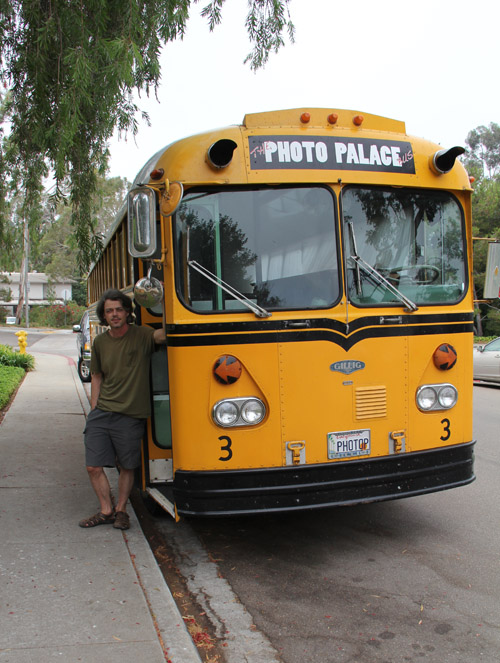
Tuesday, August 14, 2012
Local filmmaker, Jodi Cilley, named as Lead Instructor of Video Production at UCSD Extensions
Repost from reviewer magazine 
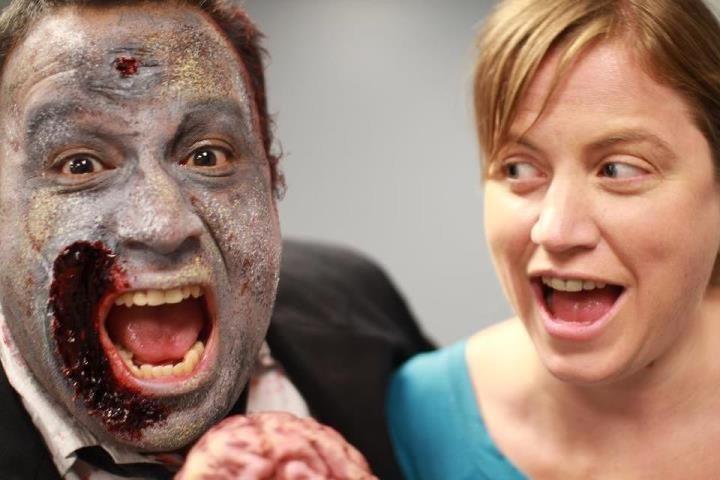
Jodi Cilley (right) with Zombie Ary Hernandez
Filmmaker and production company owner, Jodi Cilley will begin her new position as Lead Instructor of Video Production at UCSD Extensions Fall 2012.
Cilley's list of accomplishments is as extensive as it is unique. She has worked and lived on both sides of the border, teaching bilingual video production classes and producing dozens of short documentaries that explore social justice themes such as illegal immigration, tenant’s rights, safety and health in impoverished communities and the struggles of undocumented youth in the US. She is the owner and operator of her own video production company, VideologiCo, and she has taught video production for the past 8 years and currently teaches at the Media Arts Center San Diego and Platt College. She is one of the founding members of the San Diego Student Film Festival and will be directing and expanding the festival this year.
Cilley has produced and directed a number of short films with supernatural themes--recently zombies, vampires and ghosts. She has quickly become a household name to zombie fans in San Diego and has been able to bring together hordes of zombies for various film projects including a KPBS fundraising video and a commercial for a LA Based credit union. She is currently working on writing and producing a post apocalyptic zombie web series. Her credentials include a MBA from SDSU with specializations in Entrepreneurship and Management, a BS in Sociology from Boston College, and a Certificate in Video and Film from San Diego City College. She has been featured on Univision, TV Azteca, KUSI, SD Insider, KPBS, NPR, Radio Hispana as well as in Reviewer Magazine, San Diego City Beat, San Diego Reader, and the San Diego Union Tribune. Most of all Cilley is known for her passion for the arts, her dedication to education, filmmaking, and adventure. She spent over 6 years living in Tijuana, MX and has traveled extensively to destinations most travelers steer clear of such as India, China, Japan, Morocco, Thailand, Brazil, Peru and Mexico.
Look out for casting and crew calls, workshops and plethora of strong work coming out of the Video and Editing department this year at UCSD.
“I’m really excited to continue my work building the San Diego film community and helping facilitate more opportunities for filmmakers, cast and crew here. With this new position at UCSD Extension, I will get to bring all of my passion, excitement and contacts into the great programming that already exists there.”
Those interested in taking classes, getting involved or otherwise learning what’s happening at UCSD Extension’s digital arts program can check us out at http://dac.ucsd.edu/ or join the facebook page at https://www.facebook.com/UCSD.Extension.Digital.Arts.Center.
“I’m really excited to continue my work building the San Diego film community and helping facilitate more opportunities for filmmakers, cast and crew here. With this new position at UCSD Extension, I will get to bring all of my passion, excitement and contacts into the great programming that already exists there.”
Those interested in taking classes, getting involved or otherwise learning what’s happening at UCSD Extension’s digital arts program can check us out at http://dac.ucsd.edu/ or join the facebook page at https://www.facebook.com/UCSD.Extension.Digital.Arts.Center.
Monday, August 6, 2012


Friday, July 20, 2012
Angry Pussy, Friday July 20th, 7-10pm
Angry Pussy, The Art of Genghis, curated by Anjela Piccard
July 20th, 7-10pm
White Box Contemporary, 1040 Seventh Ave., Downtown, San Diego


Thursday, July 19, 2012
STALL30 at White Box Contemporary, THIS FRIDAY, July 20th, 7-10pm
Re-posted from Reviewer Mag link
What happens in public restrooms? An even more intimate question is, what happens in public restroom stalls? The usual: unloading, regrouping, relaxing, laughing, tears, sex, drugs... what else?
Anjela Piccard probes these questions with her partners in crime, Kla-bada Roberson and Niki King. The particular bathroom stall in question is located at Ms. Piccard's studio headquarters AKA Coup d'État PICCARD. And the subjects of the photographs are "30 Women of Influence" photographed over 30 consecutive days during the month of June.
The Women of Influence include ladies with titles like, first African American flight attendant, Fox News producer, Filmmaker for Scumbag Movies, and former Arts and Culture Editor for San Diego City Beat. Each of the "models" is regarded by the artists (Piccard, Roberson, King) as a woman with a significant influence in her particular world, influence in her particular niche --influence in her particular stall.
Piccard's fascination of the public/private duality that's located within a public restroom is wrapped in the idea that the restroom is a place of significant events in a woman's life. It's a location where she might deal with her first period, where she may learn she's pregnant, and most commonly, it's a private place of sanctuary where she will go to deal with a challenge. She may leave a situation in tears, dispirited, dirty, bloody, unhinged, but when she returns from the restroom, she will be composed.
Concept for the project came from Anjela Piccard, Women of Influence decisions were made by all three of the artists, and photographer Niki King was the one doing the actual shooting. One conceptual and aesthetic decision for the project was to shoot all the women on film-- analogue black and white film. King, who has a particular affection for film, chose this workflow because it emphasizes The Real, the un-digitized, and the untouched.
Kla-Bada Roberson, the incredible model and stylist, is not only the #1 photograph in the series, she's also the daughter of the first African American flight attendant (#15 in the series), and the grand daughter of the oldest women in the series --as her 100 year old grandmother is #30.
Each of the artists is also a subject for the project, as I might disclose, am I (#2).
You can see us and the women listed below in a vulnerable, sometimes undressed state, this Friday at STALL30 at White Box Contemporary, 1040 7th Avenue, San Diego, California 92101
Women of Influence include:
Kla-Bada Roberson, Katherine Sweetman, Niki King, Rebekah Sager, Danielle Yoder, Erika Davies, Bea Pesenti, Elizabeth Martinez, Margeaux Maledon, Jessica Hunt, Nicole Novak, Alisha Marie Brandenburg, Anjela Piccard, Lynda Martin, Mary J. Roberson, Janice Dodge, Leia Gadow, Erica McCampbell (AKA Genghis), Michele Arthur, Greta Proctor, Kinsee Morlan, Jahvanna Audrian, Kayla Galasso, Lea Caughlan, Lindsey Nobel, Leslie Marcus, Sarah Flamm, Diana Cavagnaro, Mavreen Jimenez, and Beatrice Jones
Friday, July 6, 2012


Subscribe to:
Posts (Atom)